Walk through any grocery store in Austin and you will see shelves packed with carpet deodorizer powders promising a “fresh home” in minutes. For busy households with pets, kids, and Texas humidity, that promise is tempting. Sprinkle, vacuum, and move on with your day.
The problem is that many carpet deodorizers do far more harm than good. As a professional carpet cleaner in Austin, I see the long-term damage these products cause every week. Worn traffic lanes, carpets that re-soil fast, backing failure, and even ruined vacuums often trace back to repeated deodorizer use.
This guide explains what carpet deodorizers are really doing to your floors, why baking soda on carpet is not as harmless as it sounds, and what actually works to remove odors without damaging fibers.
What Carpet Deodorizers Are Made Of (And Why It Matters)
Most powdered carpet deodorizers rely on fine abrasive ingredients to absorb odors. Common components include baking soda (sodium bicarbonate), calcium carbonate, and silica-based minerals similar to sand.
These powders are marketed as “natural,” which leads many homeowners to assume they are safe. The issue is not toxicity alone. The issue is how these fine particles behave once they settle deep into carpet fibers and backing.
Carpet is designed to trap soil until it can be removed through thorough vacuuming and professional cleaning. When abrasive powder is added intentionally, it becomes part of the problem rather than the solution.
How Carpet Deodorizer Powders Damage Carpet Fibers
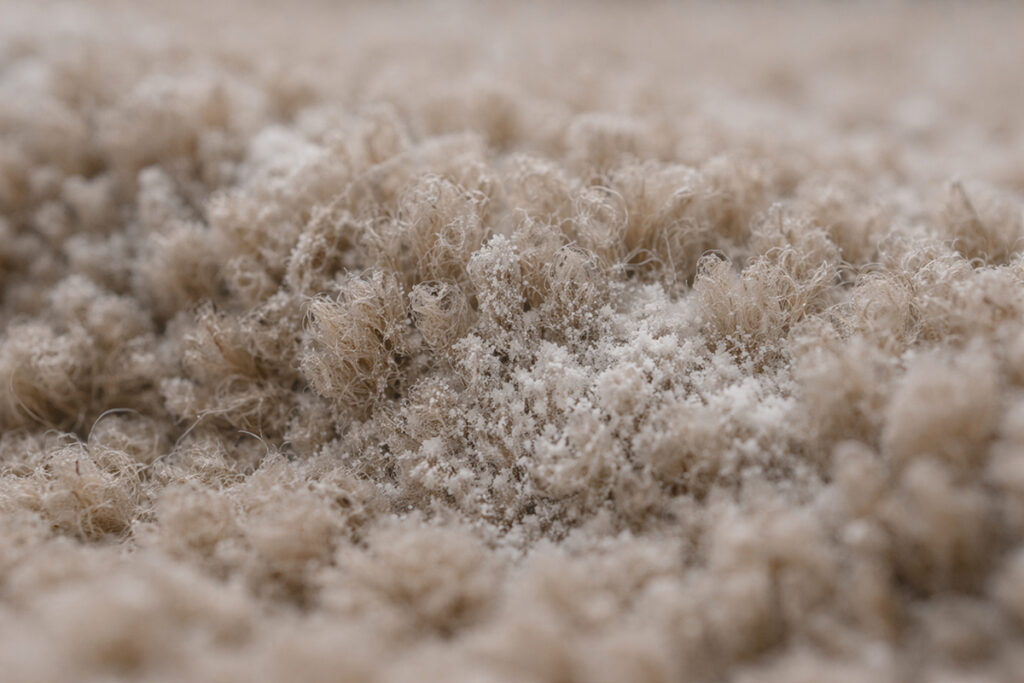
The most common damage I see from deodorizer use is fiber abrasion. Powdered products fall below the surface of the carpet where vacuums struggle to reach them. Every step you take grinds those particles against the fibers.
Over time, this friction dulls the surface and causes premature wear. In high-traffic areas, it leads to what cleaners call “traffic lane gray,” where fibers look dark and worn even after cleaning. This is not dirt. It is damaged fiber that can no longer reflect light properly.
Once fibers lose their structure, no cleaning method can restore them. This is why proper maintenance matters, and why following professional carpet maintenance tips that ensure results that last can significantly extend carpet life.
Why Carpets Soil Faster After Using Deodorizers
Another issue with carpet deodorizer powders is residue. Even aggressive vacuuming rarely removes all of the product. Independent cleaning professionals estimate that standard vacuuming removes only about 60–70 percent of fine powder residue.
The remaining residue acts like a magnet for oils and soil. Carpet begins to look dirty again within days, not weeks. In Austin, where humidity stays high for much of the year, moisture causes residue to cling even more aggressively to fibers.
This is why homeowners often tell me, “My carpet looks worse after I clean it.” In many cases, the real cause is deodorizer buildup that was never fully removed.
Hidden Damage: Carpet Backing and Delamination
Fiber damage is only part of the story. Some of the most expensive problems happen underneath the carpet.
Carpet backing is held together with latex adhesives. Baking soda and similar powders are alkaline and moisture-attracting. Over time, they migrate into the backing and weaken the adhesive structure. This can cause delamination, where the backing separates and the carpet loses stability.
Signs of backing damage include rippling, wrinkling, or carpet pulling away from tack strips. Once delamination begins, replacement is often the only option. No deodorizer label warns homeowners about this risk, but it is well-documented in professional cleaning standards published by the Institute of Inspection, Cleaning and Restoration Certification (IICRC), which sets guidelines for proper carpet care.
The Vacuum Damage Most Homeowners Never Expect
Carpet deodorizers do not just harm carpet. They also damage vacuums.
Fine powders are small enough to bypass many filters, especially in bagless or lower-end machines. Over time, powder accumulates inside motors, clogs internal components, and reduces suction. Vacuum testing experts at publications like Homes & Gardens, who spend hundreds of hours evaluating vacuums, consistently warn that powdered deodorizers shorten vacuum lifespan and cause silent motor failure.
Replacing a vacuum every few years adds up quickly and often costs more than professional carpet cleaning would have.
Health Concerns for Families and Pets
Powdered deodorizers also raise indoor air quality concerns. When applied and vacuumed, fine particles become airborne. Children and pets are closer to the floor and breathe these particles at higher concentrations.
Residue that settles on furniture, countertops, and pet beds can continue circulating long after application. For households with asthma, allergies, or respiratory sensitivity, this can worsen symptoms rather than improve comfort.
If odor is persistent or linked to pets, moisture, or smoke, professional odor removal services address the source safely instead of spreading particulate residue throughout the home.
Is Baking Soda on Carpet Ever Safe?
Baking soda is often promoted as a gentle, household-safe solution. While baking soda is useful in many cleaning applications, carpet is not one of its strengths.
Baking soda is abrasive, moisture-loving, and water-soluble. During professional hot water extraction, baking soda dissolves and then recrystallizes as carpet dries, leaving behind a white residue that resurfaces days later. This is one reason technicians often need multiple passes to remove residue left by DIY treatments.
If baking soda is used at all, it should be applied sparingly and removed immediately. Even then, it does not eliminate odor sources trapped in padding or backing. If residue issues already exist, following guidance on how to avoid residue in carpet with these tips can prevent further damage.
What Actually Works to Remove Carpet Odors
Carpet odors are caused by contaminants such as pet oils, spills, bacteria, and moisture trapped below the surface. Masking these odors does not solve the problem.
Professional hot water extraction remains the most effective way to remove odor-causing material. This method flushes fibers with controlled heat and cleaning agents, then extracts contaminants from deep within the carpet. According to cleaning standards outlined by the ANSI/IICRC S100 guidelines, proper extraction removes both visible soil and embedded abrasive particles.
Professional-grade deodorizers are pH-balanced and designed to neutralize odors without leaving residue. These products are manufacturer-approved and do not rely on grit or masking fragrances.
Safer Ways to Freshen Your Home Without Damaging Carpet
If your goal is light scent rather than odor removal, there are safer alternatives that do not involve spreading powder on carpet.
Some homeowners place a drop of essential oil on a cotton ball near an air return or inside a vacuum bag so scent disperses through airflow rather than carpet fibers. Others use laundry scent beads inside a sealed vacuum canister, never applied directly to flooring.
Ventilation, humidity control, and regular vacuuming with a properly maintained machine also play a major role in keeping homes smelling clean without chemical buildup.
When to Call a Professional Carpet Cleaner
If you notice rapid re-soiling, dull traffic lanes, lingering pet odors, or white residue after cleaning, it is time for a professional assessment. Austin homes face unique challenges including pets, outdoor soil, and seasonal humidity that accelerate odor and residue problems.
A professional inspection evaluates fiber type, padding condition, and odor source before selecting the correct treatment. This approach protects carpet investment and improves indoor comfort without unnecessary product buildup.
Clean Carpets Smell Better Than “Freshened” Ones
Carpet deodorizers offer short-term scent but long-term damage. Abrasive powders wear fibers, weaken backing, clog vacuums, and contribute to indoor air issues. Baking soda on carpet is not harmless, and repeated use often shortens carpet life.
True odor control comes from removing contaminants, not covering them up. Professional cleaning, proper maintenance, and safe odor-neutralizing methods keep carpets looking better, longer.
At Absolute Carpet & Tile, our goal is not just to make carpets smell clean today, but to help Austin homeowners protect their floors for years to come.
Frequently Asked Questions
Does carpet deodorizer ruin carpet?
Repeated use can damage fibers, attract soil, and weaken carpet backing over time.
Can I vacuum immediately after deodorizing?
Even immediate vacuuming leaves residue behind due to how fine powders embed in fibers.
Is baking soda bad for carpet fibers?
Yes. Baking soda is abrasive and moisture-attracting, which contributes to wear and residue issues.
What is the safest way to remove carpet odors?
Professional hot water extraction combined with pH-balanced deodorizers removes odor sources without damaging carpet.