You pick a floor because it looks great in the showroom. A few months later, you notice dust buildup, footprints, and stains that take real effort to remove. That is a common experience across Austin homes.
Central Texas adds extra pressure. Pollen, dust, pet hair, and humidity changes all affect how your floors look and how often you clean them. Many homeowners focus on style first and cleaning second. That order often leads to frustration.
This guide answers a simple but important question: which option is easiest to live with day to day? We compare hardwood floor vs laminate vs engineered hardwood based on real cleaning effort, durability, and long-term maintenance.
Key Takeaways: Hardwood vs Laminate vs Engineered Hardwood
- Laminate is the easiest to clean for daily life. Its sealed surface keeps dust, stains, and pet hair on top, so you can clean quickly with a broom or dry mop—no special products or polishing required.
- Cleaning effort increases with natural wood surfaces. Engineered hardwood requires moderate care, while solid hardwood needs the most maintenance due to sensitivity to moisture, scratches, and cleaning products.
- Durability directly affects cleaning time. Floors that resist scratches and stains (like laminate) reduce buildup and problem areas, while softer wood surfaces show wear faster and require more upkeep.
- Climate and lifestyle should guide your choice. In areas like Austin with dust, pollen, and humidity swings, low-maintenance surfaces like laminate help control allergens and reduce cleaning frequency.
- Action step: match flooring to your routine, not just style. Choose laminate for busy homes, engineered hardwood for balance, and solid hardwood only if you can commit to ongoing care and refinishing.
Understanding the Three Flooring Types
Solid Hardwood
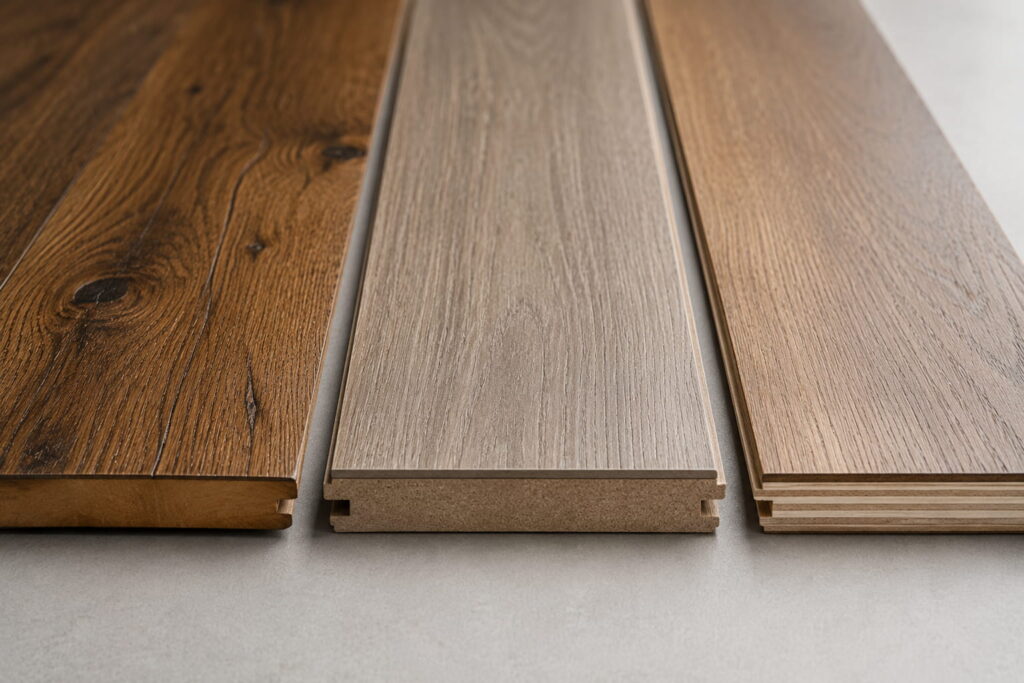
Solid hardwood uses natural wood planks. It offers a premium look and long lifespan. It also reacts to moisture, scratches, and daily wear. That means cleaning requires more care and consistency.
Laminate Flooring
Laminate uses a layered design. It includes a fiberboard core, a printed image layer, and a protective wear layer. The planks lock together and “float” over the subfloor .
This design creates a smooth, sealed surface that resists dirt and scratches. That feature plays a major role in how easy it is to clean.
Engineered Hardwood
Engineered hardwood combines a real wood surface with a layered core. The top veneer gives it a natural look, while the core adds stability .
It sits between laminate and solid hardwood in both performance and maintenance.
Which Floor Is Easiest to Clean?
Laminate: The Clear Winner for Easy Cleaning
Laminate floors offer the simplest cleaning routine.
- Dust and debris stay on the surface
- A broom, vacuum, or dry mop removes most dirt
- No waxing or polishing required
The sealed wear layer prevents dirt from settling into the surface. That reduces buildup over time. According to flooring comparisons, laminate also features a strong protective layer that resists scratches and stains .
For busy homes, this makes a big difference.
Engineered Hardwood: Moderate Cleaning Effort
Engineered hardwood requires more attention.
- Dirt can settle into the wood grain
- You must use gentle cleaning tools
- Excess moisture can damage the surface
Daily cleaning stays simple, but deep cleaning takes more care than laminate.
Solid Hardwood: Highest Maintenance
Solid hardwood demands the most effort.
- Sensitive to water and cleaning chemicals
- Requires specific products
- Needs consistent upkeep to protect the finish
If you skip maintenance, the floor shows wear quickly.
Deep Cleaning and Spill Management
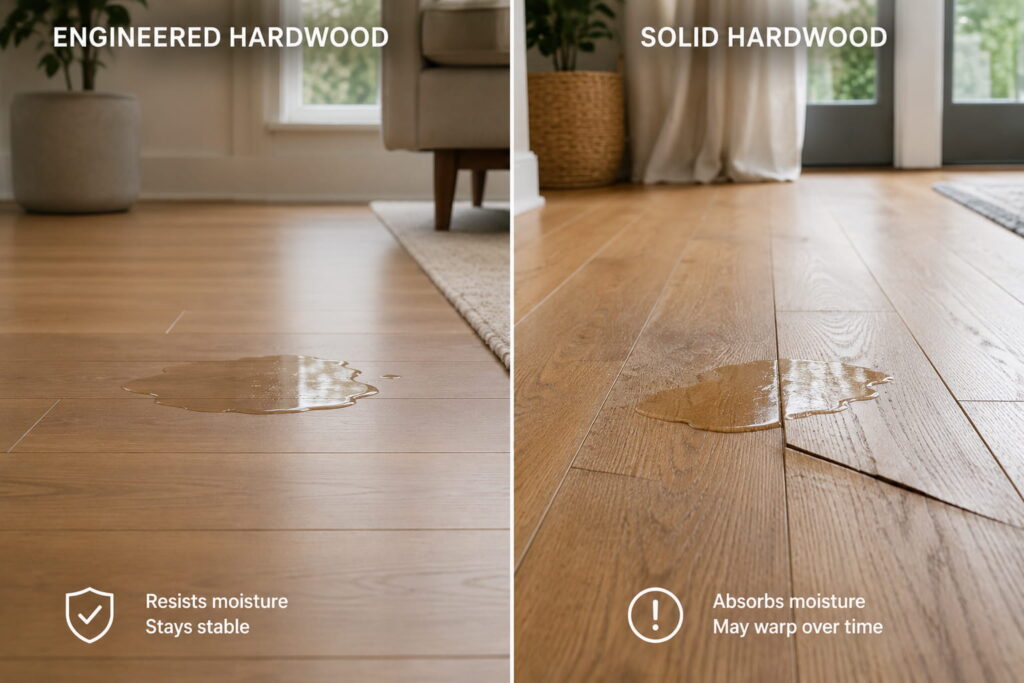
All three flooring types share one rule: act fast with spills.
- Laminate resists surface moisture but can swell if water seeps underneath
- Engineered hardwood handles light moisture but still requires caution
- Solid hardwood can absorb water and warp
The key is quick cleanup. According to home care guidance from The Spruce flooring comparison guide, standing water causes damage across all wood-based flooring types.
Durability and Its Impact on Cleaning
Cleaning becomes easier when floors resist damage.
Laminate Performs Best in High-Traffic Homes
Laminate includes a strong wear layer that protects against:
- Scratches
- Dents
- Stains
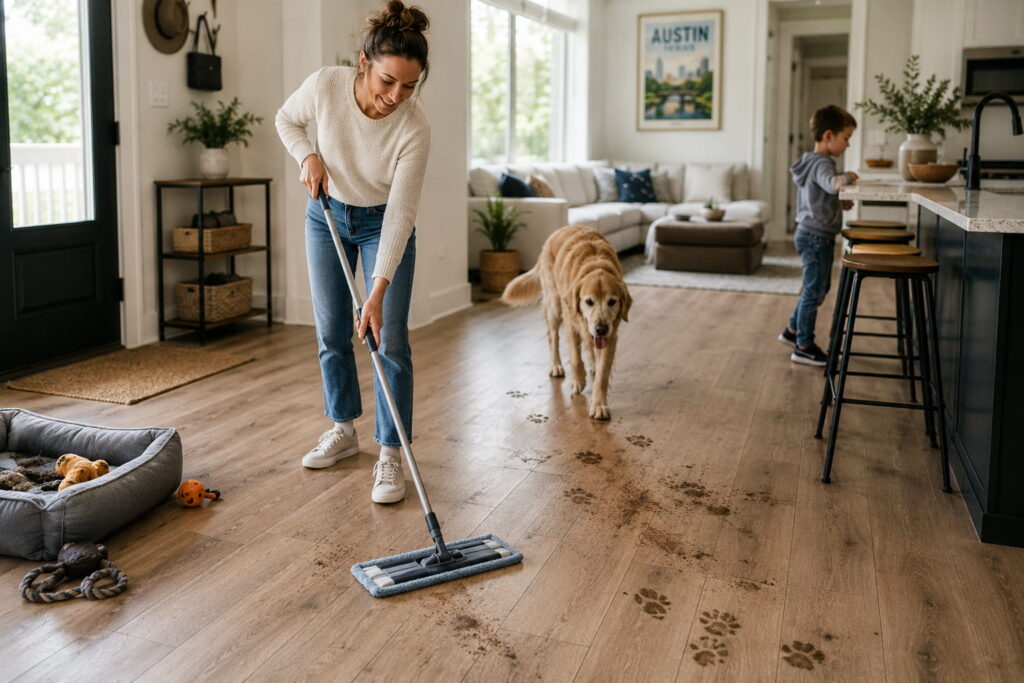
This makes it ideal for homes with pets or children. Less damage means fewer problem areas to clean.
Engineered Hardwood Balances Style and Strength
Engineered hardwood offers durability with limits.
- Protective coatings reduce wear
- Surface can still scratch over time
- Some floors allow light refinishing
It holds up well but still requires care.
Solid Hardwood Requires Protection
Hardwood floors show wear faster.
- Scratches from pets and furniture
- Dents from heavy objects
- Finish wear in high-traffic areas
The advantage is that you can refinish the surface. That extends lifespan but adds maintenance work.
Austin Climate: Why It Matters for Cleaning
Austin homes face unique conditions:
- High pollen counts
- Dry and humid swings
- Dust from outdoor activity
These factors affect how often you clean and how floors perform.
Laminate resists surface debris well. Engineered hardwood handles humidity better than solid wood. Solid hardwood reacts the most to climate changes.
For air quality, the EPA indoor air quality guide explains that smooth, easy-to-clean surfaces help reduce dust and allergens indoors. That supports the advantage of laminate in daily maintenance.
Long-Term Maintenance Differences
Laminate: Low Maintenance
- No refinishing
- Simple cleaning routine
- Replace when worn
Laminate offers the lowest long-term effort.
Engineered Hardwood: Moderate Maintenance
- May allow limited refinishing
- Requires proper cleaning methods
- Lasts longer than laminate
Engineered wood can last decades with proper care.
Solid Hardwood: High Maintenance, Long Lifespan
- Requires refinishing over time
- Needs careful cleaning
- Can last 30+ years
It offers the longest lifespan but requires the most work.
Installation and Cleaning Impact
Installation affects how dirt collects.
Laminate installs as a floating floor with tight seams. This reduces gaps where debris collects .
Engineered hardwood may require glue or nails. Poor installation can leave gaps that trap dirt.
Solid hardwood requires precise installation. Any gaps increase cleaning difficulty.
Cost vs Cleaning Value
Laminate
- Lowest cost
- Lowest cleaning effort
- Best value for busy homes
Engineered Hardwood
- Mid to high cost
- Balanced maintenance
- Strong long-term value
Solid Hardwood
- Highest cost
- Highest maintenance
- Best resale value
According to Consumer Reports flooring guidance, homeowners should balance cost with maintenance effort when choosing flooring. Cleaning time is often overlooked but plays a major role in satisfaction.
Best Flooring for Different Lifestyles
Homes With Pets or Kids
Choose laminate.
- Scratch resistance
- Easy cleanup
- Low stress maintenance
Style-Focused Homes
Choose engineered hardwood.
- Real wood appearance
- Balanced durability
- Moderate cleaning effort
Long-Term Investment Homes
Choose solid hardwood.
- Highest resale value
- Long lifespan
- Requires ongoing care
Common Cleaning Mistakes to Avoid
Many homeowners damage floors during cleaning.
Avoid these mistakes:
- Using too much water
- Using steam mops on wood surfaces
- Skipping regular dust removal
- Using harsh chemicals
These issues affect all flooring types but damage hardwood the most.
When Professional Cleaning Helps
Even hard surfaces benefit from professional care.
Deep cleaning removes:
- Fine dust buildup
- Allergens
- Residue from improper cleaning
In Austin, dust and pollen settle quickly. Regular professional cleaning helps maintain both appearance and indoor air quality.
Which Floor Is Easiest to Clean?
The answer depends on your priorities, but the ranking is clear:
- Laminate: Easiest to clean and maintain
- Engineered hardwood: Balanced option
- Solid hardwood: Most maintenance required
Laminate works best for busy households. Engineered hardwood offers a mix of style and function. Solid hardwood fits long-term investment goals but requires more effort.
Choose based on your lifestyle, not just appearance. The right floor should match how you live every day.
FAQ
Is laminate or engineered hardwood easier to clean?
Laminate is easier because it has a sealed, smooth surface that resists dirt and stains.
Can you mop engineered hardwood floors?
Yes, but use minimal moisture and avoid soaking the surface.
What flooring is best for pets?
Laminate works best because it resists scratches and is easy to clean.
Does hardwood flooring require more maintenance?
Yes. Hardwood needs specific cleaners and regular care to maintain its finish.
Which flooring lasts the longest?
Solid hardwood lasts the longest because it can be refinished multiple times.